Showing posts with label shalom. Show all posts

Friday, February 10, 2017

Grace + Peace - The Path to Unity

The "grace and peace" salutations in Paul’s letters are plentiful:

  • (Rom. 1:7)  To all in Rome who are loved by God and called to be his holy people: Grace and peace to you from God our Father and from the Lord Jesus Christ.
  • (1Cor. 1:3 ) Grace and peace to you from God our Father and the Lord Jesus Christ.
  • (2 Cor. 1:2)   Grace and peace to you from God our Father and the Lord Jesus Christ.
  • (Gal. 1:3)  Grace and peace to you from God our Father and the Lord Jesus Christ,
  • (Eph. 1:2)  Grace and peace to you from God our Father and the Lord Jesus Christ.
  • (Phil. 1:2)  Grace and peace to you from God our Father and the Lord Jesus Christ.
  • (Col. 1:2)  To God’s holy people in Colossae, the faithful brothers and sisters in Christ: Grace and peace to you from God our Father.
  • (1Thes. 1:1)  Paul, Silas and Timothy, to the church of the Thessalonians in God the Father and the Lord Jesus Christ: Grace and peace to you.
  • (2 This. 1:2)   Grace and peace to you from God the Father and the Lord Jesus Christ.
  • (Titus 1:4 ) To Titus, my true son in our common faith: Grace and peace from God the Father and Christ Jesus our Savior.
  • (Philem. 3) Grace and peace to you from God our Father and the Lord Jesus Christ.

"Grace" or "grace to you" sounded like the standard Greek greeting, but, for Paul, it was jam-packed with theological meaning. And, on the other hand, "peace" was a Jewish blessing filled with weighty, theological significance -- "shalom."

Paul knew that many in these early church congregations were torn by factional strife. But he didn't say, "Grace to you Gentiles, and shalom to you Jews." No, grace was not just for Greeks, and peace was not just for Jews. God's desire was for the whole community to receive his grace and experience his shalom—not merely the absence of conflict, but the fullness of well being, harmony, wholeness, and life.

So Paul said, "Grace and peace to you." Paul addressed Gentile and Jewish believers together, as members of one body. He wrote in continuity with their cultural and ethnic backgrounds, yet pointed to a new, countercultural reality. He combined a Greek greeting and a Hebrew greeting to create a distinctively Christian greeting.

And it wasn't just the Apostle Paul…

  • (1Pet. 1:2) ....who have been chosen according to the foreknowledge of God the Father, through the sanctifying work of the Spirit, to be obedient to Jesus Christ and sprinkled with his blood: Grace and peace be yours in abundance.
  • (2Pet. 1:2)  Grace and peace be yours in abundance through the knowledge of God and of Jesus our Lord.
  • (Rev. 1:4)  John, to the seven churches in the province of Asia: Grace and peace to you from him who is, and who was, and who is to come, and from the seven spirits before his throne...

Today our society continues to be divided by race, class, gender, sexual orientation, national orientation, and, oh yes, politics. And within the church, we sadly mimic our culture. We are split over theological matters - Dispensationalism and Covenantalism, Calvinism and Arminianism, Complementarianism and Egalitarianism, Evangelicalism and mainliners.

Yet Paul would argue that our common identity transcends our differences. He would plead with us to treat one another charitably, to extend patience and grace, and to strive to make peace with one another. Indeed, our church congregations should be some of the few places in our society where conservatives and liberals (and everything and everyone in between) can break bread together and celebrate a common Savior and a common cause.

Wednesday, March 25, 2015

A Better Way to Understand Sin...

Sin is disruption of created harmony and then resistance to divine restoration of that harmony….God hates sin not just because it violates his law but, more substantively, because it violates shalom, because it breaks the peace, because it interferes with the way things are supposed to be. (Indeed, that is why God has laws against a good deal of sin.) God is for shalom and therefore against sin. In fact, we may safely describe evil as any spoiling of shalom, whether physically (e.g., by disease), morally, spiritually, or otherwise. Moral and spiritual evil are agential evil – that is, evil that, roughly speaking, only persons can do or have.  Agential evil thus comprises evil acts and dispositions. Sin, then, is any agential evil for which some person (or group of persons) is to blame. In short, sin is culpable shalom-breaking. 
“Culpable disturbance of shalom” suggests that sin is unoriginal, that it disrupts something good and harmonious, that (like a housebreaker) it is an intruder, and that those who sin deserve reproach. To get our bearings, we need to see first that sin is one form of evil (an agential and culpable form) and that evil, in turn, is the disruption or disturbance of what God has designed. 
In sum, shalom is God’s design for creation and redemption; sin is blamable human vandalism of these great realities and therefore an affront to their architect and builder.

Cornelius Plantinga, Jr., 

Friday, December 5, 2014

Christmas Shalom

The True Meaning of Christmas Peace

Glory to God in the highest, and on earth peace among those with whom he is pleased! ~ Luke 2:14

There's a lot of talk this time of the year about peace. We sing songs about peace, hear Scripture passages about peace, see signs and Christmas decorations with the word "peace" in them...it seems like peace is being referenced everywhere!

But what's the deal with peace? What did the angel refer to when he said, "Glory to God in the highest, and on earth peace to men on whom his favor rests" to the shepherds Luke 2:14? When you begin to look into the meaning ,and implications, of biblical peace, namby-pamby Christmas decorations and greeting cards do very little in capturing the true essence of peace.

The Old Testament word for peace is shalom - שָׁלֹום (in Hebrew) and εἰρήνη (in Greek). Shalom is much more than a simple greeting, kind audible jester or even the opposite of conflict; it’s an all-encompassing biblical concept. Shalom refers to harmony, syncretism, wholeness, and every kind of good. It refers to an experience of well-being, wholeness, harmony, reconciliation, and security through a proper relationship with God and each other. So the basic meaning of shalom is not absence from war or trouble, but one of well-being and every kind of good.

For the Hebrew people, Shalom, was/is one of the underlying principle of the Torah - "Her ways are pleasant ways and all her paths are shalom (peace)” (Proverbs 3:17. The Talmud explains, "The whole of the law (i.e.,Torah) is to promote shalom” (Talmud, Gittin 59b). The biblical concept of shalom takes us to the heart of the Gospel and unfolds the mysteries of God's redemptive plan for the entire cosmos expressed in passages such as Isaiah 9:6-7; 11:1-9; 65:17-19; Amos 9:11-15; and Acts 3:18-21. In fact, one of God’s covenant names is Jehovah-shalom, “The Lord is peace” or “The Lord is our peace” (Judges 6:24). The Apostle Paul links this Old Testament reference of God to the cosmic redemptive agenda of utterly crushing evil in Romans 16:20 – The God of peace will soon crush Satan under your feet.

Many authors and scholars have commented on how we should understand shalom; but I have found none better than Cornelius Plantinga in his book, Not the Way It's Supposed to Be: A Breviary of Sin.   Here's a great quote taken from his book:
"[The prophets] dreamed of a new age in which human crookedness would be straightened out, rough places made plain. The foolish would be made wise and the wise, humble. They dreamed of a time when the deserts would flower, the mountains would run with wine, weeping would cease and people could go to sleep without weapons on their laps. People would work in peace and work to fruitful effect. Lambs could lie down with lions. All nature would be fruitful, benign, and filled with wonder upon wonder; all humans would be knit together in brotherhood and sisterhood; and all nature and all humans would look to God, walk with God, lean toward God and delight in God. Shouts of joy and recognition would well up from valleys and seas, from women in streets and from men on ships."

"The webbing together of God, humans, and all creation in justice, fulfillment, and delight is what the Hebrew prophets call shalom. We call it peace but it means far more than mere peace of mind or a cease-fire between enemies. In the Bible, shalom means universal flourishing, wholeness and delight – a rich state of affairs in which natural needs are satisfied and natural gifts fruitfully employed, a state of affairs that inspires joyful wonder as its Creator and Savior opens doors and welcomes the creatures in whom he delights. Shalom, in other words, is the way things ought to be."


May peace of God be within you, upon you, and flow through you this Christmas season. Shalom.

Monday, August 18, 2014

Dan Allender on Relationships, Connectedness, + Shalom

In A Relationship?
Single? Engaged? Married?
Parent? Child?
Neighbor? Co-Worker? Friend?

We all crave intimacy—with God and with others. So what does God’s design for intimate relationships look like? Watch as Dan Allender gives us a fresh take on friendship, dating, and marriage relationships and how we can pursue wholeness in those areas of our lives.


Friday, February 21, 2014

Shalom, Human Flourishing, + the Evangel

This Sunday (February 23, 2014), we'll be talking about the hebrew concept of shalom and how The Evangel of Jesus Christ as to serve + renew humanity. As recipients of this wonderful Gospel (i.e., Good News) we too are called (or you could say, restored into) a lifestyle of shalom working. This is what Paul meant in Ephesians 2:10 - "For we are God’s handiwork, created in Christ Jesus to do good works, which God prepared in advance for us to do."

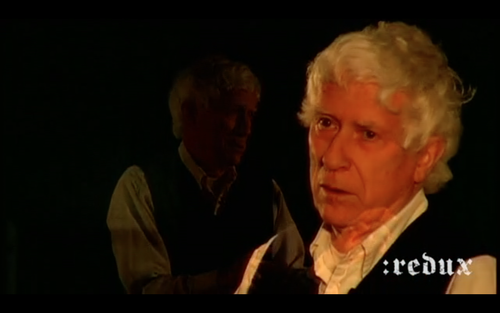
Here's a video of Dr. Nicholas Wolterstorff, author and professor of Philosophical Theology Emeritus at Yale University, answering a question on the nature of the Hebrew concept of Shalom and how that affects justice, art, education, etc. as part of human flourishing.

It's simple, yet insightful. (Plus, you got love a guy who blows his nose into a hankie while speaking to a large crowd. Very honey-badger-like. Got to love it.)


image
Click picture to see the video.

Also, listen to some of Wolterstorff other answers to questions about justice and righteousness here - https://vimeo.com/channels/291350.